J4-insight
News and Information
J4-insight is a source of useful information, news and opinion related to technology management.
You can read updates below or subscribe to our mailing list.
If you wish to subscribe to our mailing list please click here
(You can unsubscribe at any time and we promise to only email occasionally)

What is the difference between a prototype and a MVP
A prototype is a preliminary version of a product or system that is used for testing and development. It is typically a rough or incomplete version of the final product, and is often used to demonstrate the feasibility of an idea or to gather feedback from potential users. Prototypes can be physical or digital.
A minimum viable product (MVP) is a version of a product that has the minimum set of features necessary to be viable in the market. It is designed to be developed and tested quickly, with the goal of gathering feedback and refining the product based on that feedback. An MVP is typically released to a small group of users, and is used to determine whether there is a market for the product and to identify areas for improvement.
The main difference between a prototype and an MVP is the stage of development and the level of polish. A prototype is usually developed early in the product development process, and is used to test and refine an idea. An MVP, on the other hand, is a more fully developed product that is released to a small group of users for testing and feedback and capable of being sold with a representative feature set.
What does it take to go from MVP to pilot and production?
There are several steps that are typically involved in moving from an MVP to a pilot and then to production:
• Gather feedback: After an MVP has been released, it is important to gather feedback from early customers and users to understand what is working well and what needs to be improved. This can help to identify areas for further development and to prioritize features for future releases.
• Refine the product: Based on the feedback gathered from the MVP, the product can be refined and further developed. This may involve adding new features, improving usability, or fixing bugs.
• Run a pilot: Once the product has been refined and is ready for more extensive testing, it may be useful to run a pilot program. This can involve a small-scale rollout of the product to a select group of users, to gather further feedback and data on its performance.
• Prepare for production: Once the product has been successfully tested in a pilot program, it is time to prepare for full-scale production. This may involve ramping up manufacturing, developing a marketing plan, and putting in place the necessary infrastructure and support to launch the product.
It’s important to note that the steps involved in moving from an MVP to production can vary depending on the specific product and market, and may require significant resources and planning.
Both prototypes and MVPs can be useful tools for product development and market testing, but they serve different purposes and are used at different stages in the development process. In summary, Prototypes are typically used to test and refine ideas, while MVPs are used to test market viability and gather feedback from users.
Need help refining your product development approach or getting the best from a MVP? For more details and the opportunity to discuss your application please contact us.
The question of subcontracting
Should I make it myself or subcontract?
Whether you should make a product yourself or subcontract the manufacturing process depends on a variety of factors, including your own capabilities, resources, and goals, as well as the nature of the product and the market.
Here are some things to consider when deciding whether to make a product yourself or subcontract:
- Your own capabilities: Consider your own skills and resources, and whether you have the necessary knowledge, expertise, and equipment to manufacture the product yourself. If you don’t have the necessary capabilities in-house, subcontracting may be a better option.
- The complexity of the product: Consider the complexity of the product and whether it is feasible to manufacture it yourself. If the product requires specialized equipment or processes that you don’t have access to, subcontracting may be a better option.
- The scale of production: Consider the scale of production and whether you have the capacity to manufacture the product in-house. If you are producing a large volume of products, subcontracting may be more cost-effective.
- The cost of production: Compare the cost of manufacturing the product yourself with the cost of subcontracting the process. Consider factors such as the cost of materials, labour, and equipment, as well as any economies of scale that may be achieved through subcontracting.
- Quality control: Consider the importance of quality control and whether you have the necessary processes and systems in place to ensure that the products are of high quality. If quality is a critical factor, you may want to consider keeping the manufacturing process in-house to have more control over it.
By considering these factors, you can make an informed decision about whether to make a product yourself or subcontract the manufacturing process.
Need help deciding? Talk with people you know who have gone through the process, even if not in a similar industry or get some external advice. For more details please read our article here and for the opportunity to discuss your application please contact us.
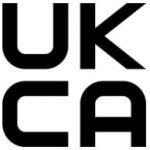
On Monday November 14, 2022, the UK government announced another extension to the deadline for applying the UKCA mark to manufactured goods.
Whilst the UKCA mark can be used now, this extension means businesses can choose to use the CE mark until December 31, 2024.
In addition, businesses will be allowed to affix the UKCA mark and include importer information for products from EEA countries on an accompanying document or label until December 31, 2027.
Conformity assessment activities for CE marking undertaken by December 31, 2024 can be used by manufacturers as the basis for the UKCA marking, until December 31, 2027.
Read the UK government’s announcement in full: Businesses to be given UK product marking flexibility – GOV.UK
Businesses will have an additional year to apply new product safety markings for most products placed on the market in England, Scotland and Wales, the government has announced.
Recognising the impact of the pandemic on businesses, the government will extend the deadline to 1 January 2023 to apply UKCA marks for certain products to demonstrate compliance with product safety regulations, rather than 1 January 2022.
Read the full story here
The new UKCA (UK Conformity Assessed) marking declares that the product conforms to all applicable U.K. legislative requirements and that appropriate conformity assessment procedures have been successfully completed. Beginning Jan. 1, 2021, the UKCA marking will replace the CE marking as a requirement for goods entering the Great Britain market, including England, Scotland and Wales. The UKCA marking will be required on products subject to the U.K. equivalent legislation to all of the EU Directives/Regulations that required CE marking, including the Radio Equipment, EMC and Low Voltage Directives. Additionally, all U.K.-based EU Notified Bodies will also lose their status on Jan. 1, 2021. All EU Certificates issued by those bodies must be transferred to an EU 27 Notified Body by Dec. 31, 2020 to ensure continued validity.